
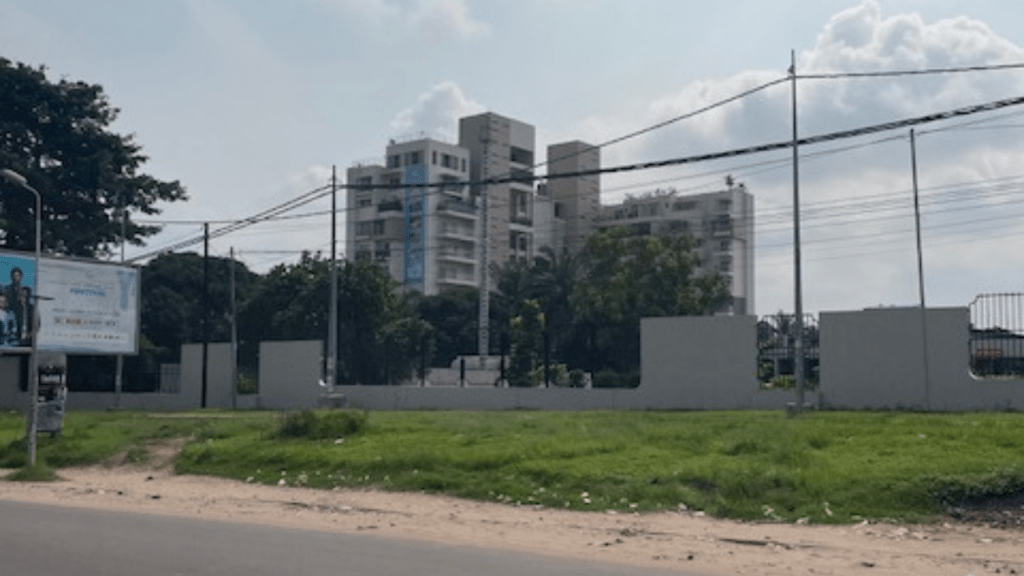
It has now been nine months since I bought a one-way ticket to spend a year in Kinshasa, in the D.R. Congo.
So today is the time for me to write about some of the realities I am encountering here. I was born in Kinshasa but left at the age of two, and only came back aged fourteen. I stayed for six years and did my secondary school studies here before moving to the UK. It has been seventeen years since my last time here. Things have changed tremendously; some for good, some for bad. Like everywhere in the world, there are advantages and inconveniences; places that will make you smile and places that will break your heart.
The Good
- Sunshine
Truth be told, I hate the cold of the UK, and I do not miss it a bit. Spring and Autumn are my favourite seasons over there; I enjoy mild weather the most. But winter and all the layers you need to wear are not for me. I am that friend who is always cold. The heat in Kinshasa can be intense. On average, it’s 35 degrees Celsius, but it feels like 40 degrees Celsius most of the time. I did not know my body could sweat this much. But the daily dose of vitamin D is worth it. I do stay very attached to my fan.
- Organic food
They say you are what you eat, well, I am organic now. I am grateful that the majority of the vegetables and fruits I eat are produced without chemical compounds. It is all fresh food right from farmers in and around Kinshasa. I am also enjoying all kind of tropical food that I have not have eaten in so long: maracuja, mangoustan, , tondolo, safu etc… I am a big fish eater and all the fishes here comes straight from the river. It is truly a gastronomical feast.
- You are never alone
One thing that I had forgotten here is the sense of community. In most houses, it is common to live with a nephew, an uncle or a grandparent. You don’t always see the typical home with only parents and children. Neighbours talk to you and invite you to their house parties. If there are any issues in the neighbourhood, people automatically come together to resolve them. You are never really alone. People will often come to visit, and someone is always checking on you. A child has countless aunties and mothers. Unlike Europe, loneliness is not a growing issue. The concept of the ‘village’ still very much exists here.
- People have a lot of talents
Congolese people are known for their music and dances. But there are plenty of talents here. I work with an art organisation, and I have been discovering many artists and seeing their creations firsthand. Furthermore, the ingeniousness of people coming up with all kinds of ideas to survive in a country that is pretty much a failed state. From those who make rechargeable batteries to have access to electricity to the simple street vendors who make all types of artefacts to sell to any generous buyer.
The Bad
- Driving around Kinshasa is an extreme sport.
Local transport is non-existent. Taxis and minibuses are usually owned by individuals, and they tend to fill the vehicles to maximise profits. The roads are full of potholes and are not appropriate for driving. The population in Kinshasa has more than tripled over the past two decades, so there are more cars on the road. Kinshasa has the most insane traffic. If you leave the house at certain times, be prepared to spend two to four hours in traffic. There are moments when your car will not be moving at all. Going out can be tiresome when you have to consider the possibility of getting stuck somewhere for a long time.
- The lack of infrastructure and ecosystems
Unfortunately, the Congo lacks significant infrastructure: inadequate roads, power cuts due to faulty systems, water shortages due to poor organisation, and the absence of adequate facilities and equipment in hospitals and schools. Many people died in hospitals for reasons such as a lack of blood available for transfusions. There is little to no socioeconomic growth in the country. This hinders the living conditions of its population, which lives in dire poverty.
- Witnessing some of the hardest poverty
As noted previously, poverty is rampant in Kinshasa. In the UK, you can see homeless adults in the streets; here, you see a mother and her children living in the streets. The statistics show that 62% of Congolese, around 60 million people, live on less than $2.15 a day; about one out of six people live in extreme poverty (reference:Worldbank.org). I feel really guilty when I go outside and see others suffering. The sad truth is that even if you offer them a little, it is not enough to change their conditions. You might only help them for today.
- Survival mode and low morals
Poverty also pushes people into a constant state of survival. Many people have low morals or none at all. People are quick to steal and betray others. Many people are stuck in the cycle of trying with what they can, yet are unable to get out of misery. They then experience high levels of anxiety and depression. For them, being dishonest is the only way to survive. You will always have someone trying to ‘hustle’ money out of you. It makes it really hard to trust people.
There is so much more I could say. The Congo is a paradox. On one side, there are the ongoing violent conflicts in the Eastern region and the corruption of the politicians. On the other side, there is an abundance of mineral resources and phenomenal wildlife. I have now come to accept how things are here. The reality is that I cannot completely replicate the life I had in the UK here in Kinshasa. I had to make certain compromises and adjustments. I had to accept how things are different. I have now adapted. It is not easy.
Being here is a bittersweet experience. But it is an experience I fully embrace. It may sound crazy, but I know that I am exactly where I am supposed to be right now. I cannot wait to see what else is in store for me here.
Mboka Elengi…*
(*lingala for: the country is enjoyable)