
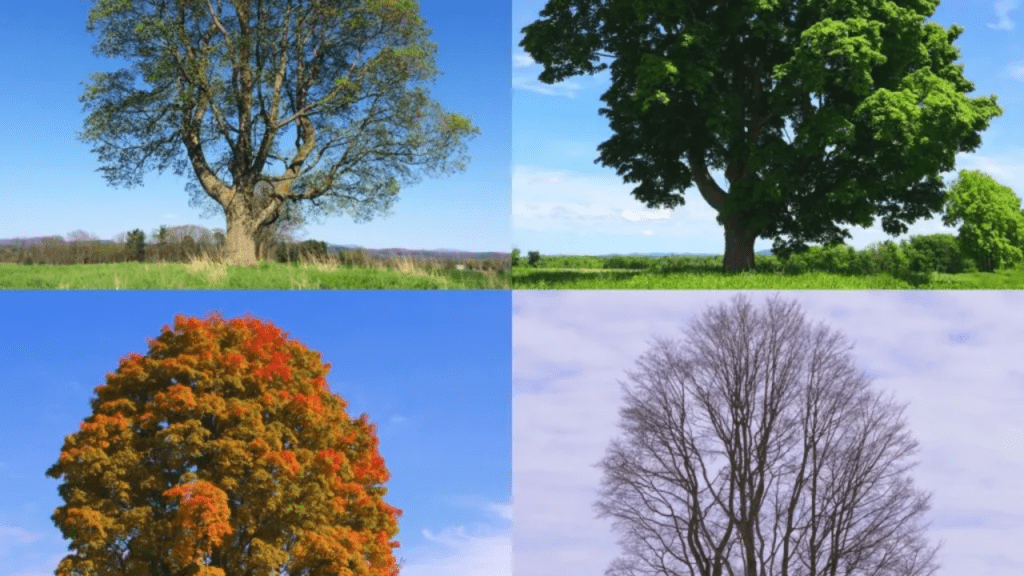
One of my favourite biblical passages is found in Ecclesiastes 3. It is titled: ‘There is a time for everything’. In it, the author states that life has cycles and seasons for everything. For example, there is a time to laugh, and a time to cry; a time to plant, and a time to harvest; a time to be quiet, and a time to speak; and so on. It ends with a verse stating that “God has made everything beautiful for its own time”.
Life is a journey.
It fluctuates with different seasons. We will come across them the same way as we come across the weather divisions in a year: Summer, Autumn, Winter and Spring. There are times when it is cold and dry, and times when it is sunny and fruitful. Each season comes with different conditions, and they follow one another regularly. The question is: how do we approach them? How do we deal with the ever-changing nature of our journey?
Seasons change
Let’s be honest: some seasons are more enjoyable than others, and we would prefer for them to last longer. We want to stay in those seasons. We are happy there, especially when things go well. We always look forward to them. They are our Spring, Summer and Autumn. Then, there is Winter. Very few people really enjoy Winter. Most elements of nature themselves are inactive or die during Winter. For us, it can symbolise cold, uncomfortable and painful times. Things may actually die, such as the end of a relationship or the loss of a job. We may be grieving or experiencing some form of brokenness. We cannot stop the cyclical nature of seasons. The good seasons will come at some point, but the colder seasons will follow soon. Whereas the year has already established the four seasons’ length (three to four months), our lives are different. There is no set time for our seasons. Some winters can be very long, and some summers can be quite short.
Your attitude matters
Since we cannot stop seasonal changes, we can either resist or embrace them. If I am honest, I tend to do both. Usually, when something changes in my life, I resist it at first. I do not even have the desire to start adjusting to the situations. I even look back and say things like: ‘things should have stayed the same’ or ‘I miss what was’. There is usually denial and anger. But I eventually adapt. The reality is, I am suffering more from resisting the change than from accepting it. My attitude affects the way I deal with the season. I have to understand that there is a reason for the season. Will I not be better off living in it with a positive attitude, doing my best? Instead of wondering why I am in the season, maybe I should ask what I am supposed to learn here?
This season is leading you to the next one.
Sometimes seasons are times of transition, when we are being prepared for the next. It is an intermission into the next act. For example, we go to study courses in University to acquire knowledge for a particular job. The University years are sharpening our knowledge and skills for the day we finally step into our desired profession. So each season has its purpose. Even in nature, Winter is a preparation for Spring. Some annual plants require the Winter cold temperatures to complete their life cycle. They call this vernalisation.
The benefits in each season vary, but they are there. Even the bleakest of times can have their fill of joy, moments of peace and bring you different perspectives. Each season has its own beauty, and each is necessary. Nothing is really wasted; it all matters. Some seasons of your life have shaped you into who you are. Some are shaping you now into who you need to become. We cannot predict how long each can take, but we can allow ourselves to adjust in each of them. It is not always easy, but nothing in life is.
Summer can be full of excitement.
Autumn can help us rest.
Winter can make us sick.
Spring can revive us.
The warmer months tend to be better, but the cold ones are important too.
You plant seeds in one and harvest in the other.
You will be filled to be empty again.
But no matter how long Winter can take, Spring will eventually come.
image via Pinterest